We’re a rag-tag group of people vigilantly pursuing self-sustaining educational & employment opportunities with and for students and their families living in rural communities in developing countries. We believe in asking hard questions like, “What do you need and how can we help?” We believe that communities know their needs better than we do and that it’s our job to listen. We’re big on being kind for the sake of kindness and we believe that even the smallest acts of kindness can make a big difference. We believe in keeping vigil over one another and watching for opportunities to help, no matter how far off the beaten path those opportunities take us. We’re vigilant in our belief that God has given each person unique gifts and that one of the highest forms of worship is using those gifts to serve others. We believe God has a purpose for each life and Vigilante Kindness is our purpose. Join us as we live out wild adventures in service of God and others. Join us in committing acts of Vigilante Kindness.
My heart is heavy tonight. Within the last month, two of my former students have lost their fathers. There is no grief so searing as a little girl losing her father too soon. The latest loss leaves me hollowed out. This father was a great man, the kind of man who all the children gravitated to because of his gentle way.
I am locked in grief. For his wife. For his son. For his darling daughter. For everyone who knew him. It is a piercing loss and all I can do is blink back tears and write.
He Used To
He used to walk her to class each morning,
Hug her tight,
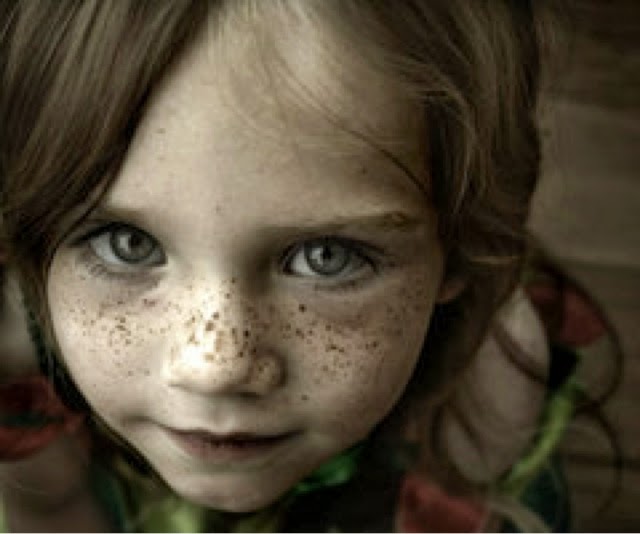
Kiss her freckled nose with kindness.
He used to smile at her,
The corners of his eyes crinkled with happiness,
Her eyes mirrors of his youth.
He used to adjust her helmet strap,
Remind her to hold on tight,
All at once holding onto his little girl,
All at once letting her go.
He used to be able to kick free from the deep,
To push toward light,
Toward air,
Toward truth,
Toward life.
He used to look into her adoring eyes,
Know her love was real,
Know he was worthy of being loved.
Then he stopped knowing
Her freckles,
How to hold on tight,
How to kick to the surface,
How to quell the lies with truth,
That he was worthy,
That he was loved,
That love was real.
I used to know that man.
Now there is only his freckled girl and the
Beautifully raw memories of
Who he used to be.
A friend once advised me that when I find myself in opposition with another, I should “walk into the conflict”, meaning move in closer so that resolution or at least common ground can be found.
It’s a difficult task for me because, well because I’m a giant chicken and my natural inclination is to retreat. It’s even more difficult for me walk into the conflict when I don’t see it coming and then suddenly find myself face to face with it.
Sunday was one of those days.
Bungatira, a village outside of Gulu, is home to Denis, his family and some mighty cute piglets. I was delighted to be invited back along with my son William, and my two new Swedish teacher friends, Annika and Jessica. It was a beautiful day and with a view of the lush green valley that seems to stretch for miles, the ride there didn’t disappoint.
When we arrived in Bungatira we were greeted with a welcome song and dance from Denis’ mother and the ladies of the community. It was lovely.
Bungatira has a local community group, of which Denis is the chairperson. The group is working together to make their community a better place. They’re doing it independently of NGO’s that seem to have set up camp on every corner in Uganda. They’re doing it without government aid. It’s a grass-roots group focused on improving their future.
This group is doing so many great things and I love that all of their ideas are purposes are from within. They’re beginning a savings and loan program for members. They’re looking for ways to fundraise to pay school fees for their children. They’re seeking education on issues like health and cleanliness and domestic violence. They have an eleven article constitution that details the rights and duties of membership. They have democratic elections each year. Membership is open to both male and female residents who are at least twelve years of age. The group in Bungatira is doing so many progressive things, especially when compared with surrounding villages. So when Denis asked if I’d sit in on their meeting and offer them advice if I had any, I was honored. In the back of my mind, I hoped to find another place to exercise some Vigilante Kindness.
After taking a tour of their village and having lunch in Denis’ thatch roof house, Annika, Jessica, William and I joined the meeting in progress outside. I sat down on a mat next to Denis’ mother. The group was discussing the savings and loan idea. I listened in and strained to translate Acholi into English. William joined the meeting as well and sat a few yards away from me, translating when I requested clarification. Annika was feeling ill and so Denis took Jessica and Annika back to their hotel on his boda. The meeting continued in his absence and moved on to elections. Denis was nominated for re-election and I was pleased to see that the nominations for other offices were split between men and women.
The Vice-Chairperson turned his attention to me and asked that I speak well of their group when I returned home. I asked to first read their constitution, which was written in English. The constitution was meticulously written in ink on lined paper, something that is quite costly and not easy to find.
They’d obviously put a lot of thought into it and I agreed with all of it-except their policy for dismissal from the group. Reasons for dismissal from the group were:
voluntarily leaving the group
death
failure to pay membership dues without reasonable cause
mental illness
Wait, what? Mental illness was an automatic reason for dismissal?
I felt like I was having one of those moments in the movies when the people are happy and there’s upbeat music playing and then everything halts as the music comes to an abrupt needle-scratching-across-the-record-stop.
After I read the Constitution, the Vice-Chairperson asked if I’d speak well of their group and be a bridge to anyone in the U.S. who might be able to offer help.
“Your group is doing so many things well, but I’m afraid I’m not the right person to speak on your behalf because I don’t agree with all of the articles in your Constitution.”
“We’re not asking you to support our group financially, just to be a bridge to anyone in the U.S. who might be able to help us. Perhaps you have friends who might be interested in helping,
“I’m sorry, but I cannot speak for your group when I disagree with parts of your Constitution and I don’t want to give you false hope and tell you I’ll be speaking on your behalf when I know in my spirit, I won’t be. I know my friends at home would also disagree with parts of your Constitution.”
“Which parts do you disagree with?”
“I disagree with the two places it says members will be dismissed because they have a mental illness. Maybe I’m not understanding what you mean by mental illness. Perhaps you can explain more.” Walk into the conflict, I reminded myself. I hoped that this was going to be an easily fixable thing that was simply lost in translation.
“It means depression, post-traumatic stress, schizophrenia and other mental illnesses.”
I felt like someone had punched me in the stomach. In the expansive outdoors, suddenly there wasn’t enough air. William moved from his chair and sat down next to me on the mat and I was grateful for his presence in the sea of strangers.
“I’m sorry, but I cannot agree with you. You’re treating those conditions as if the person can choose to have them or choose not to have them. To me it’s like saying a person will be dismissed from your group for contracting malaria.” I thought of my family and friends who have fiercely battled mental illnesses and I felt a lump knot in my throat. I willed myself not to cry. In the bravest voice I could muster I said, “I’m sorry, I simply can’t advocate for a group that discriminates against people with mental illnesses.”
There was a pregnant silence.
Denis’ mother spoke.
“William, what did she say?” I whispered.
“She said that maybe you’d like to see the children sing and dance.”
“Um, sure,” I recognized that retreat tactic and I almost took the welcome escape. Instead I took a deep breath and said, “But I’m not sure how that’s going to help us reach a resolution. Seeing the children sing and dance isn’t going to change my mind on this issue. Perhaps I can see them dance later.”
Another silence followed.
“Lanyero,” the Vice-Chairperson addressed me by my Acholi name. “I’m sorry, but I must go. The discussion will resume when the Chairperson returns. I wish you friendship and a safe journey back home.”
“Apwoyo. Wot maber.” (Thank you and safe journey.) I replied as he and another member climbed on their boda and sped away.
I wished I could have sped away as well, but I was in the middle of the bush, miles away from where I could catch a boda back to town. And so I sat on the mat and willed my tired brain to listen as the group addressed other issues.
I heard Denis’ boda approach from the road behind. He parked his motorcycle and hurried back to the group. After reassuring me that Annika was okay, he turned to the group, which all at once began speaking to him, their thirty some odd voices becoming a complete mash of words to my untrained ears.
“William, what are they saying?” I whispered.
“They’re filling Denis in on everything that was discussed while he was gone.” William leaned in and translated.
After the group spoke, Denis turned to William. “Would you like to say something?”
“I have already spoken,” William replied. It was true that William had spoken freely throughout the meeting, voicing his opinions and ideas about several issues.
“Alicia, would you like to speak?”
“I think I’ve said quite enough already.”
“Alicia, you are welcome in my home and in Bungatira. Please feel at home here. We know-I know-how much you’ve done for Uganda. We’re not asking you to contribute financially to our group, only to speak on our behalf in the U.S. if you see it fitting.”
“Denis, you know how much I love and respect you and how much I want to help,” I met his eyes with my own. Mine were red from fighting back tears and he cocked his head to the side, silently asking for an explanation. I continued, “I think your group is doing many great things like pursuing education for your children and seeking to end domestic violence in your village, but I’m really struggling because I cannot advocate for your group because I don’t agree with all of the articles in your Constitution. I can’t support something I don’t agree with in my spirit. I respect you too much to tell you I’m going to support your group when I know in my heart I can’t.”
“Please, Alicia, tell me which parts you disagree with.” Denis’ face was full of concern. “I’ve invited you here to advise us. Please.”
“Twice in your Constitution, it states that a member with mental illness will be dismissed for having that mental illness. I don’t agree with that. I can’t agree with that.”
“Let me explain to you the origin of that part of the article.”
“Please do.”
Walk into the conflict. Walk into the conflict. Walk into the conflict. I willed myself to remain calm. I stretched out my legs in front of me and leaned back on my hands. If I could make my body relax, maybe the rest of me would follow suit. William matched his posture to mine.
“Mental illness is rampant here. When the L.R.A. was in power, they abducted many people and most of those people returned different, returned damaged.”
Oh, God, it was getting so much worse.
I felt William’s fingers inch to over to mine and I held the hand of my son who was abducted and forced to be a child soldier for the L.R.A. My son who escaped with the help of a stranger and was welcomed back home. My son went to a rehabilitation center to be retrained to be kind instead of to kill. My son who loves animals and children and biology. My son who is college bound this month.
William and the children of Bungatira
I wondered if William would speak, but he sat quietly clenching my hand. These are dangerous things you don’t speak of. These are things you try to forget.
Denis continued. “Many of those people committed terrible acts of violence and do not have sound minds.”
“I know that time was unspeakably horrible and I’m so sorry you had to endure it. I’m profoundly grateful that you survived and that you’re safe now.” I said the words to the group, but they were for William. “I understand that you need to keep your community safe and I agree with you that if, for any reason, a person is a danger to others or to themselves, they need to get medical help and counseling, but that is not what your Constitution says. It states twice that if a person has a mental illness, they will be dismissed from the group. Those who were abducted didn’t have a choice and by not allowing them to be members of your group, you’re punishing them for something that was not in their control. If I were made to do the things they were made to do, I’d be mentally unwell, too, but I hope to God my community would welcome me back and help me heal.” I was losing the battle against the tears welling in my eyes.
Denis motioned for the Constitution to be passed to him so that he could read it.
I took a deep breath and continued in a shaky voice. “I have a loved one who battled depression and, thank God, is now happy and healthy. One of the things that helps him is being with friends, being a part of a group. It breaks my heart to think that if he lived here, you categorically wouldn’t permit him to be in your group. Being part of a group focused on the betterment of the community is one of the things that helps people heal. When they have a way to contribute that is of service to others, it can give them added purpose.” I wiped the tears from my cheeks. “I know your group is doing great things in the community, but as it stands, your group discriminates against the people I love most and I can’t…” My voice broke. “I can’t be even a small part of that.” I felt thirty pairs of eyes on me and I looked down at my lap.
I wanted to run, to disappear into the ground, to be anywhere but there.
I didn’t want to be the muzungu who came to their village for a day and told them how to live out their lives when my knowledge of their lives wasn’t even a drop in the bucket.
“Alicia,” Denis spoke my name quietly. When I looked up, I was surprised to see tears in his eyes as well. “I can see we have pained you and for that I’m sorry.”
The word pained came out as “painted” and I thought about how true it was because I was thoroughly painted in sorrow at the memories of my loved one fighting so hard against depression. I was painted in sorrow for my son who tries so hard to forget his past and move toward the future.
“We are not trying to discriminate. We have a member who is deaf and a member who cannot speak.” Denis informed me.
“I’m glad to hear you welcome people with physical disabilities, but it makes me all the more confused as to why you discriminate against people with mental illnesses.”
“Let me discuss your advice and questions with the membership.”
“Yes, please do, but please discuss it outside of my presence so that members can feel free to voice their opinions even if they differ with mine. I’m only part of this community for a short time and you’ve obviously put a lot of thought into your Constitution, so any changes to it need to be made by the group, not by a visitor.”
“Please, Lanyero. We will discuss it now and William will translate so you will know our hearts.” Denis began speaking to the membership in Acholi. William translated as needed. There was much discussion, but surprisingly no opposition.
William quietly cleared his throat, the signal for wanting to speak. The discussion halted. “Perhaps if the member suffers from mental illness and is unable to participate in the group, a close family member can be appointed to stand in their place until they’re ready to rejoin.”
“Yes, yes. How would that be?” Denis turned toward me.
“It depends on who decides when the member needs a stand in and when they get to return? Who picks the stand in advocate?”
“The group would decide and choose the advocate,” said Denis.
“William, it’s a good idea, but the member with the illness should have the right to make those final decisions, not the group. The same should be true for all members who have any sort of illness that prevents them from attending for a period of time.” I looked at the membership.
“Let me discuss this with the group.” Denis spoke to the membership and the dialogue went on loud and long, but it seemed now that they were discussing what should take place when a member dies.
I was just about to ask William to translate when Denis turned to me. “The group agrees with you. We also decided that when a member dies, a family member will be invited to join the group in their place so that the family can continue to benefit from the group and from all the dues the member contributed to the savings and loan.”
“But what decision was made about dismissing a member on account of mental illness?”
My brain was tired from trying to translate and I was fighting to understand what had just taken place. Did they move to another topic completely? Were they going to discuss it later?
“The group has decided to strike completely that reason for dismissal from our Constitution.” Denis took a pen and crossed it out in both places, inking over it again and again so that none of the words were visible any longer. “I promise you, Alicia, that we will now include those with mental illnesses. When you return you’ll see that we have changed. As chairman, I promise this will happen.” Denis met my eyes and I could see that he meant what he said.
“I believe you will, Denis.” I faced the group. “Apwoyo matek.” (Thank you so much.) Tears pricked my eyes again, but this time they were tears of joy.
The meeting concluded with a prayer and as the members left, they came and shook my hand and asked me to return again.
When the members had gone, Denis approached me. “Alicia, can we go inside for a moment?”
“Of course.” We entered his thatch roof house and sat on the couch.
Denis took my hands in his, a gesture usually reserved for friends of the same gender or for family members. “I’m so sorry I pained you.”
Again it came out as painted and I thought how over my sadness today, I received a second coating of joy.
Denis continued, “I didn’t know that your loved ones have had mental illnesses. You never told me. I’m so sorry to have brought you here and caused you pain. Please forgive me.”
“And I’m sorry if I have offended you or your members. I didn’t live your history and can only begin to understand what happened here. Because of my own history, I tend to be passionate about the topic at hand today. Sometimes, it’s hard for me to speak about it without becoming emotional.”
“It’s your heart that makes you Hero Lanyero,” Denis said, using the name he and William had bestowed upon me a few weeks ago, a name I couldn’t accept.
“I’m not a hero.” I shook my head. William entered the house and sat with us. I met his eyes and he looked as exhausted as I felt. “Come sit with us.” He took a seat across from me. “I’m so glad you were here with me today,” I said earnestly grateful I didn’t face the day alone.
“I’m proud you’re my Mum.” William smiled at me.
“I’m proud to be your Mum.” I squeezed his hand.
We had some bread before heading back to town on bodas. William rode with Michael, Denis’ older brother, and I took my usual place seated side saddle behind Denis. I watched Bungatira fade into the distance and we rode back to town, both of us quieter than usual.
“Itye maber?” (How are you?) Denis asked.
“I’m okay.” It wasn’t my usual response, but it was all I could muster.
“Let me buy you some roasted maize,” Denis offered, knowing it is one of my favorite roadside foods.
“Maybe tomorrow. I’m satisfied for now. I’m just tired.” I smiled into his rearview mirror assuring Denis that I was indeed okay, that our friendship was also okay. At the hotel we shook hands and wished each other well.
In bed that night, my whole body was heavy with exhaustion. I looked at my toes poking out of the end of my bed sheet. The African sun has darkened my feet, save for the pale stripes of skin left from the straps of my sandals. My feet look very different than the feet that first brought me to Gulu. They are browned from the sun and dyed with the red dirt of the land I love.
When these feet walk me back into my life at home, I hope they will serve as a reminder to me of the beautifully painful and joyful changes that can come from choosing to walk into the conflict.
You didn’t used to snore. You used to sleep in silent stillness, so much so that I’d hold my hand in front of your mouth to make sure you were breathing. You used to joke that you slept like you were dead.
And then came the time when you stopped sleeping, the year when you wrestled demons and wished you were dead. You wrestled in the harsh light of day and every dark, lonely night. Life was hard and there was no rest for you, no sleep to ease your mind. My sleep was punctuated with nightmares, nightmares that continued into my waking hours.
Those were dark days when we clawed our way out of the pit, only to fall back in and try again the next day. And the next day. And the next. We fought hard for our life together, fought hard to hang onto love. And light. And hope. My prayers were fervent, urgent pleas for life over death. We clung to God. We clung to each other. We clung for dear life.
After months of this exhausting struggle, my prayers were answered and you began to sleep again. I remember the first night you finally slept. You began to snore. At first the snoring scared me, startling me from sleep, reminding me of all that had changed. Even at night I couldn’t escape that fact that for better or worse, we were different.
Most days it feels like that was a long time ago and for that I’m grateful. Our life is happy. We are whole. Changed, yes, but when we put together the pieces of our fractured life, you were still you and I was still me.
Now at night when I wake to your snoring, I press into you, safe in the knowledge that you are here in this life with me. I remember the days when you couldn’t sleep. I listen to your snoring and say a prayer of thanks that you have found rest, that we have found respite together.
I’ve come to love the sound of your snores. In the quiet of night, your snoring is the sound I listen for. In fact, it’s my favorite sound, the one I want to hear all the days of my life.
I heard you snoring last night and I felt safe. I rolled over and slipped into a dream. And when I woke, I woke to our life together.
Yes, they’re beautiful, but that’s not why I love them. Adult dragonflies hunt by holding their legs together like a basket and scooping insects right out of the sky, but that’s not why I love them either. Sure they’re the only insect that can fly backwards and while that’s amazing, that’s not why they have garnered my affection.
The thing about dragonflies is that they start out as nymphs. Ugly, brown nymphs with grumpy faces. They scoot around in the water and muck, shooting out their masks, catching unfortunate prey. They spend months, sometimes years, in this stage. Wallowing in the mire. Camouflaging, even covering themselves in filth.
To the inattentive eye, it just looks like they’re hanging around being ugly, but what’s really happening is change. You see, the nymph is busy growing and molting. It grows and molts, grows and molts, leaving ghost skeletons lingering in the water.
Nymphs mostly molt in the dark of night, so that sometimes the changes go completely unnoticed until one day the nymph crawls out of the water and up a cattail. It clings to the cattail with hooks on its legs and then a most splendid thing happens. One last time, the exuvia cracks open and an adult dragonfly flops out of its old self. It hangs upside down, seeing the world in a whole new way.
The new dragonfly waits. Waits to fly. Waits to see the world. Waits to wheel in the wind. When blood pulses into the wings, the dragonfly takes off. At first the flights are clumsy. The dragonfly bumbles around as if it’s getting acquainted with itself for the first time. After a few test flights the dragonfly is zipping around, hovering and even jutting in reverse. The scowl of the nymph is replaced with eager eyes and a jeweled body that shimmers even in the faintest of light. It’s hard to imagine that the dragonfly feels anything short of joy as it skims the water, reveling in the knowledge that, at long last, it has become what it is meant to be.
At night when sad thoughts creep in and steal the remnants of sleep, I think about the dragonfly. When I’m covered in sorrow and I can’t escape the muck, I take heart in the fact that growth is happening. Change is taking place, even in times when I can’t see it. I have to believe that heartache will someday become an ill-fitting skin that will eventually crack open and give way. Give way to beauty. Give way to love.
I think of the nymph and the day it makes the final climb up the cattail. That must be one scary climb. In fact the nymph will often fall back into the mud several times while trying to make that climb. When I feel like all I’m doing is falling, I remember the perseverance of the nymph.
I swing my legs over the bed each morning. I smile at my loved ones. I breathe in and out. I tell myself to keep trying. I know one day strength will break through sorrow, leaving the mire to exist only in my memory. I wait with anticipation for the day that I’ll soar with wings pulsing with life.
I love dragonflies for their patience. I love dragonflies for their determination, for their strength. I love dragonflies because they are tangible proof that ugliness and pain cannot contain the pursuit of joy.
During lonely nights, dragonflies sweep into my mind with their basket legs and scoop away brokenness, leaving room for hope.
And that is the thing I love the most about dragonflies.


 I’ve come to love the sound of your snores. In the quiet of night, your snoring is the sound I listen for. In fact, it’s my favorite sound, the one I want to hear all the days of my life.

 Vigilante Kindness