Brick by Brick

I’ll never tire of the greens of Uganda, it’s like every shade of green is born here. The road out to the chicken farm is rich with green against the ruddy red road. I love the ride out here, past a stream and a rock quarry, past lines of children standing, waving shouting, “Munu! Munu! Munu!” to me from the edge of the road.

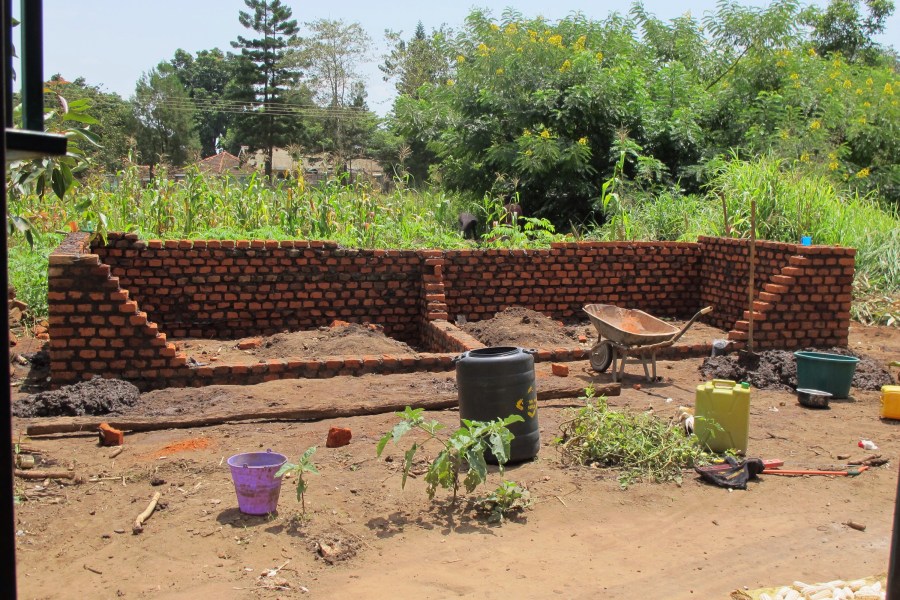
We arrive to see the chicken farm being built brick by brick, mortared together with cement and red mud from the dirt that coats everything here. The workers are taking a break from the hot sun, peeling sugarcane with their teeth. 

Lamuno welcomes us in and almost immediately Baby Patience begins crying. She sits in Lamuno’s lap and I tickle the bottoms of Pash’s feet. This is a huge step, but even still she tells Lamuno not to leave her alone with the munus and I can’t help but giggle.

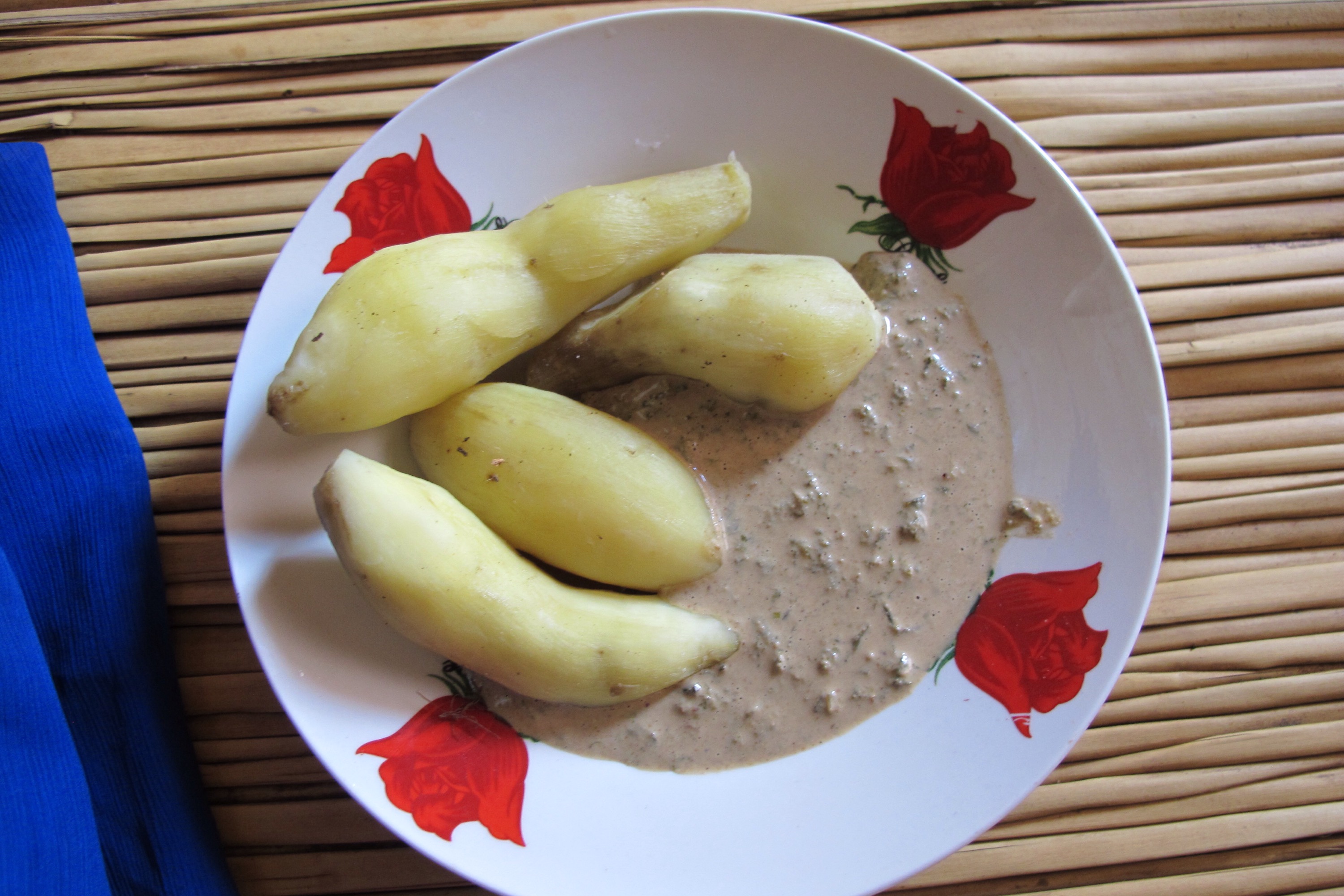
Lamuno cooks lunch for the workers and then for us. She’s fixed my favorites: beans, malakwang, and sweet potatoes. Her malakwang is perfect-nutty, rich and smoky. I eat my fill and my stomach feels round and happy. 

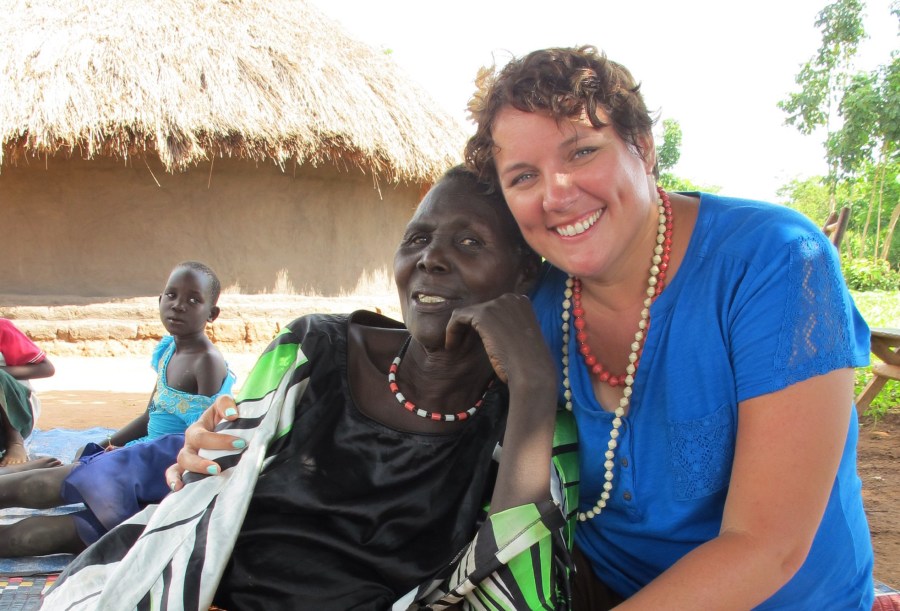
Lamuno lives in a three room brick home without power. At lunch I give her one of our charging solar lights. She hugs me and tells me she’s glad I love her, that she thinks of me as her daughter and thinks of my mother as her sister. It’s a privilege to be chosen by this strong, beautiful woman. She puts her light outside to charge and thanks me at least ten times more before I leave. 

As we ready to hop on bodas back to town, she asks me when I’m coming back. I tell her Friday, the day after the chicks arrive. She asks what she can cook for me-bo’o or malakwang? I tell her I’ll love whatever she cooks for me, but that I love malakwang more than bo’o. She nods. It’s settled.

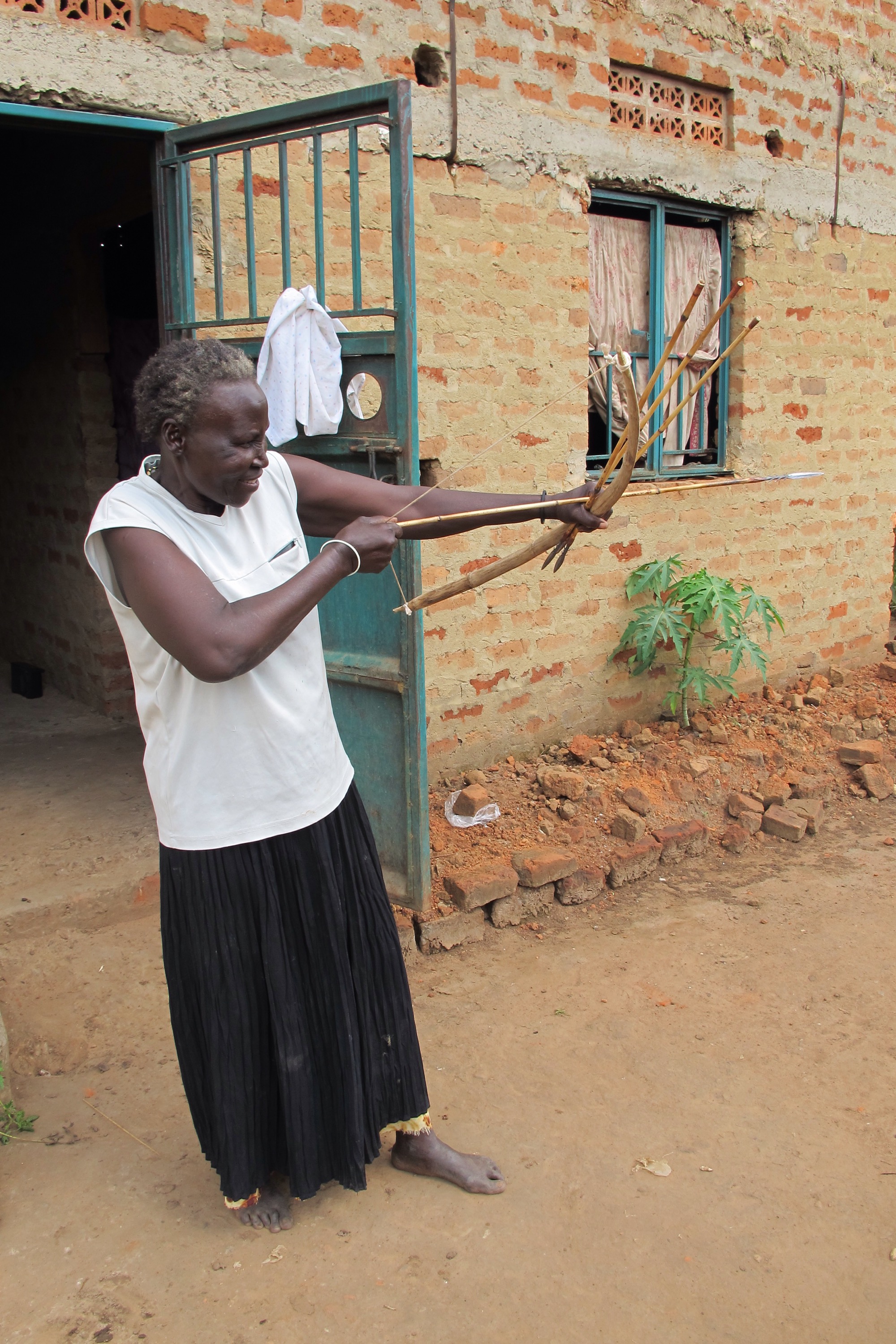
The workers and my son, Opiyo Martin, and Lamuno begin speaking Luo loudly, laughing through their words. It’s too quick for me to pick up and Martin explains that Lamuno has a bow and arrow she keeps in case she needs to defend herself at night. She slips into one of her side rooms and emerges with her bow and arrow cocked, ready to defend herself or ready to shoot any of the workers who aren’t working hard enough. 

I laugh and fall more in love with Lamuno. As she teases the workers with her bow and arrow drawn, I understand that Lamuno, too, has built her life brick by brick, mortared together with the grit and humor that coats everyone here.

Nothing is Ever Lost

If you’re newer to Vigilante Kindness, I’m glad you’re here, but you may want to go back and read a few posts before you read this one. Vigilantes who have been around a while, hold onto your hats, we’re going back to Bungatira.
Nothing is ever really lost, or can be lost,

No birth, identity, form–no object of the world.

Nor life, nor force, nor any visible thing;

Appearance must not foil, nor shifted sphere confuse thy brain.

Ample are time and space–ample the fields of Nature.

The body, sluggish, aged, cold–the embers left from earlier fires,

The light in the eye grown dim, shall duly flame again;

The sun now low in the west rises for mornings and for noons continual;

To frozen clods ever the spring’s invisible law returns,

With grass and flowers and summer fruits and corn.

-Walt Whitman

I love that poem, the idea that nothing is ever really lost. Walt Whitman had it right when he said time and space are ample. No amount of time or space can separate us from our loved ones. I’d like to add that no effort is ever in vain, no plan is ever for naught.

The part that’s resonating with me particularly today is the line about Spring’s invisible law returning. Spring comes in all her authority and seeds that have laid hidden in the soil through bare seasons, until the the right time and the right conditions collide, slip off their coats and from dark dormancy, green grows.

This is that kind of story.

Not long before I returned to Uganda, Denis messaged me that something very good had happened. I asked him to tell me what it was, but never heard from him about it again.

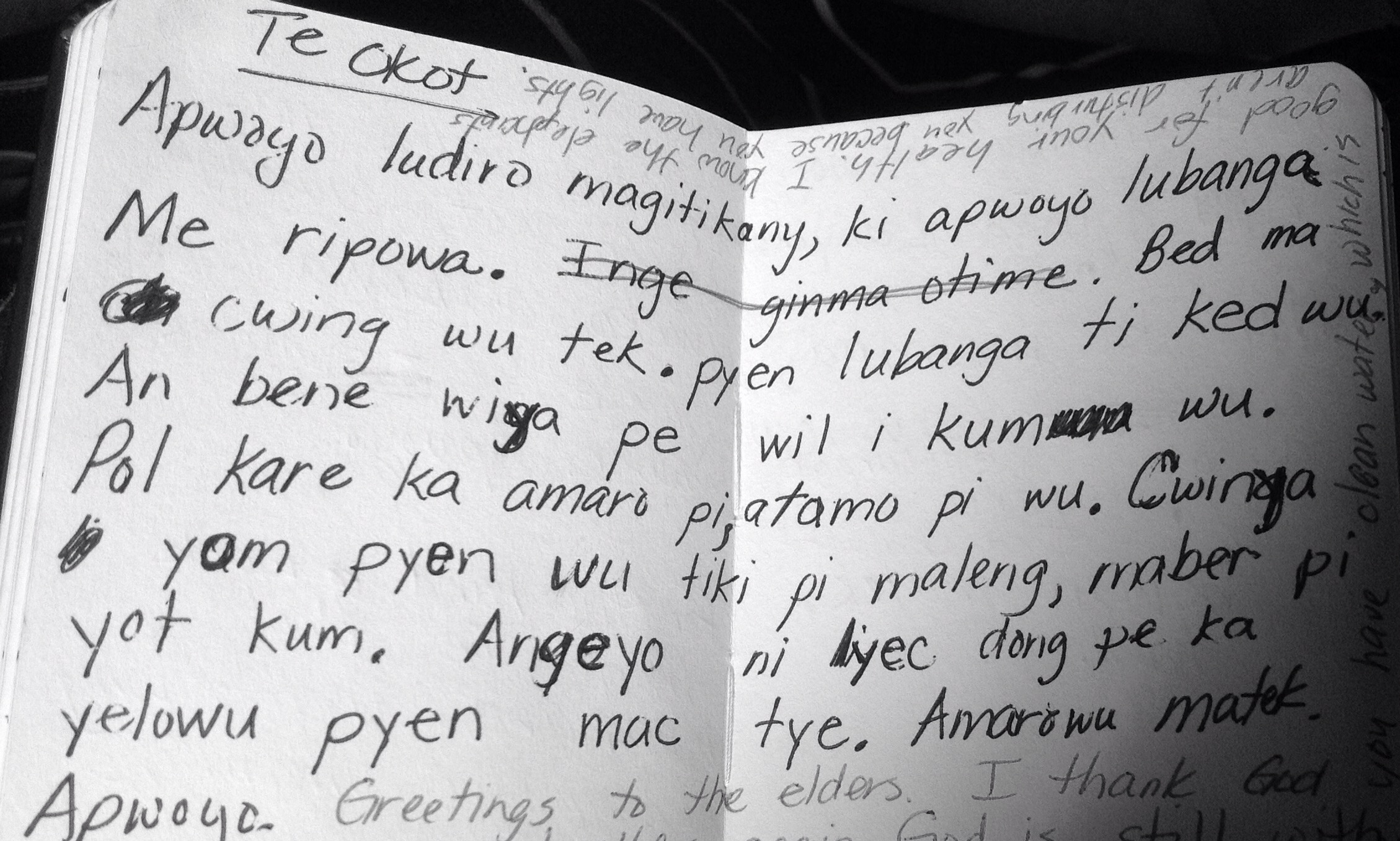
The night I arrived in Gulu, my mom, my sons, Denis and I had dinner together at a local pork joint. I sat wedged in between my oldest son, William, and Denis. William and Denis have become dear friends and they constantly tease each other. They tossed remarks back and forth over me, but during a rare cease fire, Denis leaned in and told me that his family was returning from Te Okot to live in Bungatira.

I nearly choked on my pork.

I fired about a thousand questions at Denis. What about the other chiefdom who poisoned your pigs? Where are they? How is it that you get to return? What does this mean for your land?

Over the din of the pork joint and the loud bunch I call my family, Denis unpacked the last year’s events.

There were ten chiefdoms living in Bungatira, two of which were the Pawel and the Aria. Denis’ family are Aria. It was select members of the Pawel chiefdom who poisoned Denis’ pigs, the same people who didn’t agree with the work of the Bungatira community group, the same people who claimed to be so disturbed by my presence.

I want to be clear about something, that it was not the Pawel group as a whole creating the trouble, only select members. Many Pawel lived and continue to live peacefully in Bungatira, and for that I’m incredibly grateful.

As it turns out, all of their anger wasn’t over the work the community group was doing, but was over land. I’ve said before that land is life here and it proved to be true again.

Those particular Pawel people wanted the land that Denis’ family was living on. It was fertile and near a stream, so they claimed it as their own, said that the land had belonged to them for many generations. The Pawel far outnumbered the Aria and so after meeting with their chief, Denis and his family moved to Te Okot, where they would be safe.

The people wanting Denis’ family’s land moved into their homes and took over their crops. To think of someone else forcing their way onto the land and living in Musee and Mama’s home turns my stomach to this day.

I thought that was the end of the story, but buried under conflict was a seed of justice just waiting to crack open.

Denis took their case and their history on the land, to the Aria lawyer, who brought it to the Pawel and Aria Chiefs. They heard the case and in a remarkable turn of events ruled in favor of Denis’ family.

Can you even believe it?

The select members of the Pawel tribe who’d killed Denis’ pigs, took their land and lived in their homes were forced by the Pawel chief to leave Bungatira indefinitely. They left and on my first weekend in Gulu, the Aria lawyer paid to transport Denis’ family, everyone from Musee down to my favorite kid, naughty Lucky Maurice, returned home to Bungatira.

Maybe you’re in a waiting period, a time when you can’t see the hand of God at work, a time when it seems like justice has been buried deep. Take heart, the invisible laws of Spring are at work and the seeds you’ve planted are waiting for the perfect moment to peel off their coats and grow anew.

For us at Vigilante Kindness, this means we now have two sites, in Te Okot and Bungatira, working together on the Paper Bead Project. For me, as Whitman says, the light in my eyes is now flaming again because now I have two places here filled with people I love. I’ll go visit my loved ones in Bungatira tomorrow and when I do, Whitman’s words will echo in my heart.

Nothing is ever lost.

My Tutor, Olive

My tutoring session starts out with a rousing round of peek-a-boo sessions with three year old Arthur from behind the couch cushions. He remembers me from last year and I’m grateful because having small children scream and cry at the sight of my skin gets old after a while.
Arthur’s mom, Olive, enters. She’s the cousin-sister of my son Opiyo Martin and the sister to, Lydia, one of our Work Study scholars. Olive is tall, beautiful and dressed immaculately, as are most young women here. When she smiles, she lights up the room. Olive is a single mom who lives at home with her parents. 

  Though she participated in her final year (senior 6) of high school last year, she didn’t have the money to sit for final exams and so she has to do her senior 6 year again. The whole year. It’s one of the many things that frustrates me about the educational system in Uganda.

So Olive is earning money to pay for her school fees to try senior 6 again. Today that means she’s my language teacher. Poor thing.

Olive is tasked with helping me write speeches for some of the villages and schools I’ll be visiting. Each speech feels progressively more difficult and my tongue consistently refuses to to pronounce the ny and ng sounds requisite of the Acholi language.  

Olive makes me read my speeches out loud, correcting my intonations and rhythms. Soon a friend joins us and then her cousin. I stumble over my words even more with an audience. It’s a humid day and my armpits sweat even more under the pressure of the small crowd gathered in Olive’s living room. I hate public speaking and public speaking in a foreign language is bringing my animosity to a whole new level.

As our time comes to a close, I try to pay Olive. She refuses. I tell her that I want her to have the opportunity to go back to school. She tells me she can’t take money from the mother of her cousin brother. I tell her to think of an acceptable amount for me to pay her so that when I returns for lessons on Monday, I can pay for both sessions.

Two hours, one biscuit and one cup of tea later, I’ve got three speeches in my notebook along with a pocketful of promises to Olive to keep practicing. I doubt I’ll be able to say my speeches perfectly, but I hope that where my tongue fails, my heart will take over.  

Less than Nothing, More than Pork

Calvin unpacks his story of being a street kid beggar and I watch as my son, Opiyo Martin, seated next to Calvin, folds into himself, making himself small and aling, quiet. I see his eyes flash back to the time when he, too, was a street kid picking through the garbage to find food to eat, stealing to buy food when the garbage cans availed no sustenance.

I would give anything to take that part of his life away, to erase those years and rewrite his history, to allow him to be born to a mother and father who chose to love him, chose to keep him, chose him.
I’d rewrite those years if I could, even though it would mean he never would’ve become mine. He never would’ve given me my Acholi name. I never would’ve watched joy fill his face as he ate pork, his absolute favorite thing, second only to God. I never would’ve laughed until I cried when he first said to me, “Mum, I love you more than I love pork.”

Even still, I would remove those early pages of his life.

Seeing him fold in on himself as Calvin speaks, is more than I can take. I don’t know how to extricate myself from this conversation, how to take Martin with me. Instead I catch and hold his gaze and move the toe of my shoe until it’s touching the toe of his shoe, the one with the rainbow laces that remind me he’s still a kid. It’s a small gesture and I find myself wishing for the millionth time that I was better at being his mom.


In Uganda, dogs are the lowest of all animals, pesky nuisances, always begging for food, not worth throwing a bone to. The dogs here are all skin and bones, notched rib cages visible through thin layers of matted fur. There’s an Acholi saying, Adoko gwok, meaning “I’ve become a dog.” It’s a term for the destitute, meaning I’ve become less than nothing, a person unable to provide even my own food.

Opiyo Martin always feeds the stray dogs, coos soothing words to them, feeds them the best pieces of pork from his plate. He does this because he remembers feeling like he was adoko gwok, remembers feeling as if he was worth less than nothing.

When Calvin pauses in his story, Martin explains that he’s sorry, but he has to ride his bicycle back to his uncle’s house before it gets too dark. I jump up and walk him to his bike.

“Are you okay? I know it’s hard for you to think about your past,” I put my hand on his back, rub small circles like my mom used to do when I was sick.

“Yeah, Mom, I’m okay. I’m just thinking about how far God has brought me.”

My voice catches in my throat and I nod, blinking back tears. There aren’t words for the vastness of his statement.

Earlier in the evening, we’d been talking to each other about difficult situations we each find ourselves in, seeking advice from each other. It’s one of the many times, I’m grateful to have been his teacher and friend before I became his mother. How lucky am I that my kid is also my friend?

“Mom, I wanted to pray for you and your situation. Can I do that?”

“Yes, and let me pray for you and your situation, too.” I grab his hand and standing by his bicycle we pray. We finish and I hug him tight.

“Amari, latina,” I love you, my child.

“Amari, mamana,” I love you, Mom.

“More than you love pork?” I tease.

“At least as much as I love pork,” he teases back. 

He swings a leg over his bike and I watch his rainbow shoelaces flutter in circles as he pedals away from me.

Later that night I lay under the cover of my mosquito net and hear the street dogs commence their nightly howling serenade. I wonder if they’ve found enough scraps to eat. I think of the children who are huddling in doorways and I hope that their bellies are full. I say a prayer of thanks that Calvin and Martin are no longer among them. My eyelids are heavy and I fall into a dream world where there are no longer hungry children or skin and bones dogs, a world where nobody feels adoko gwok.

Already Someone

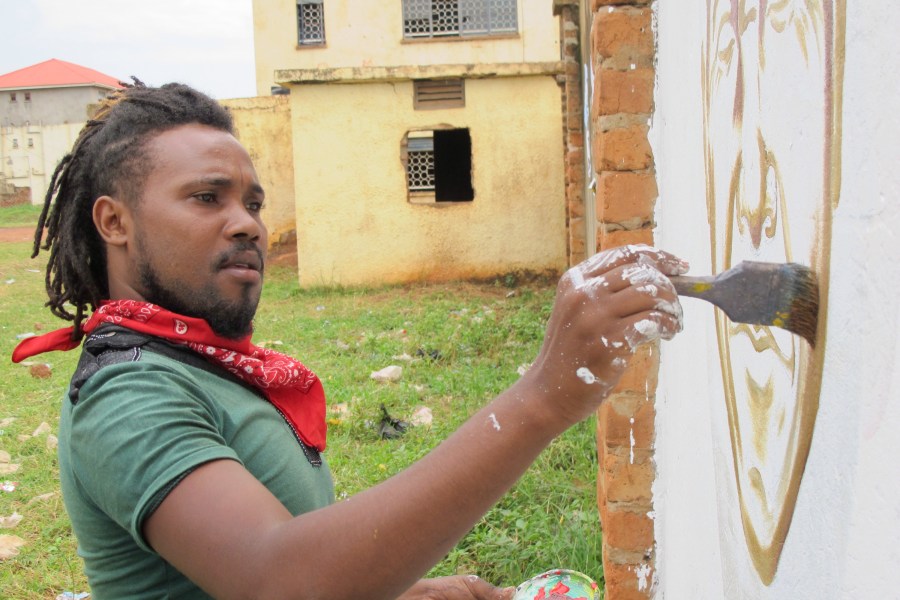
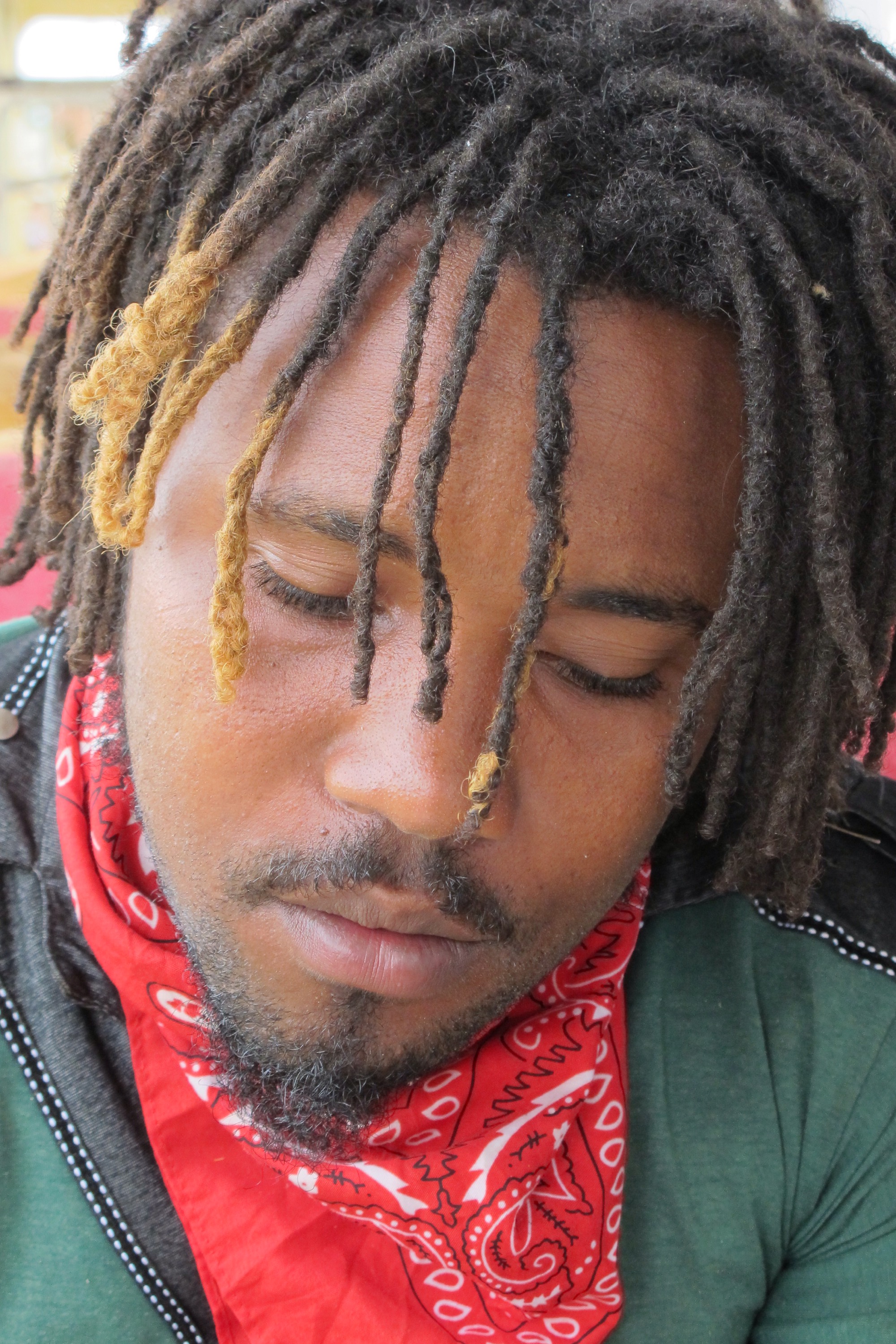
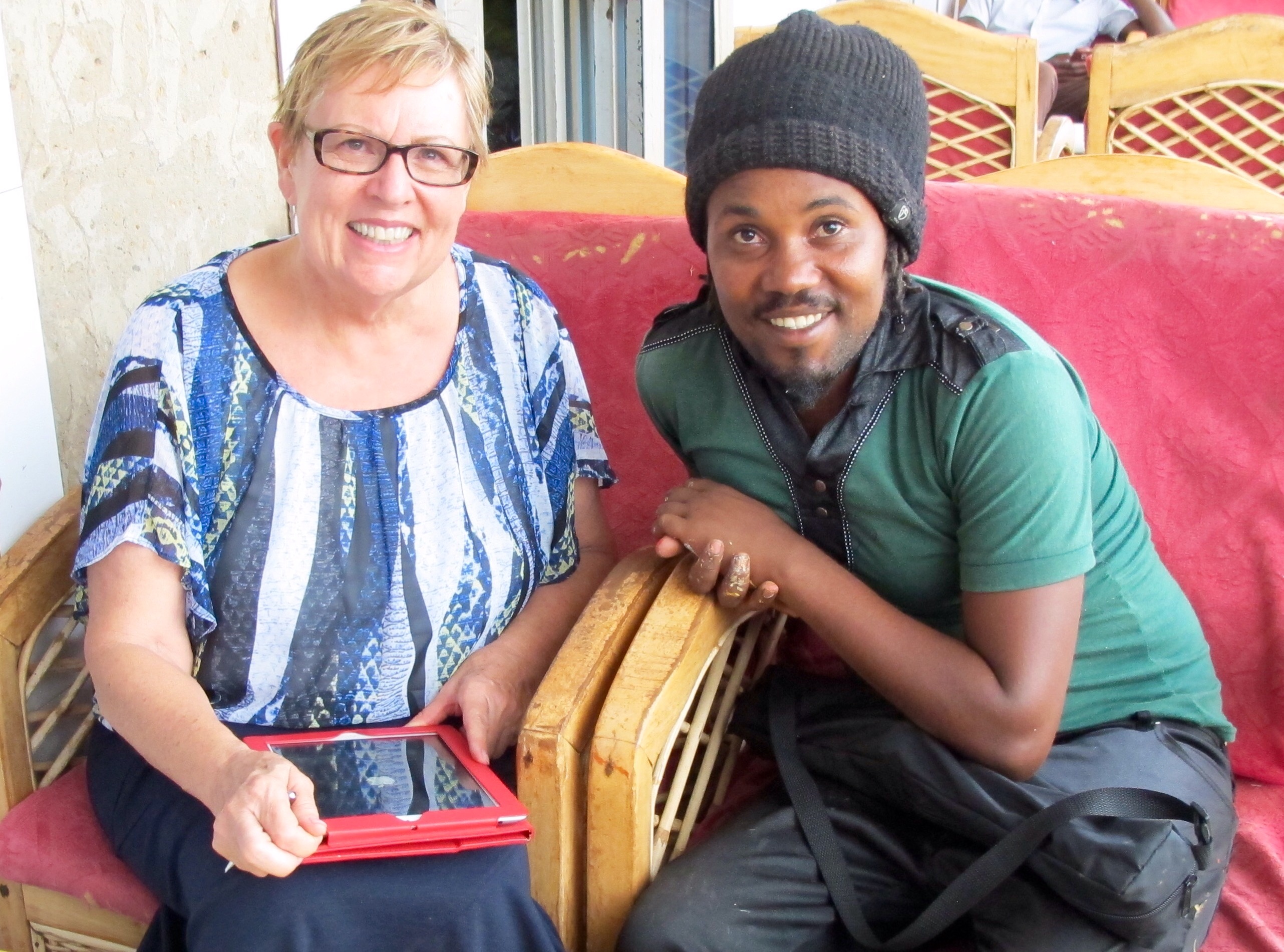
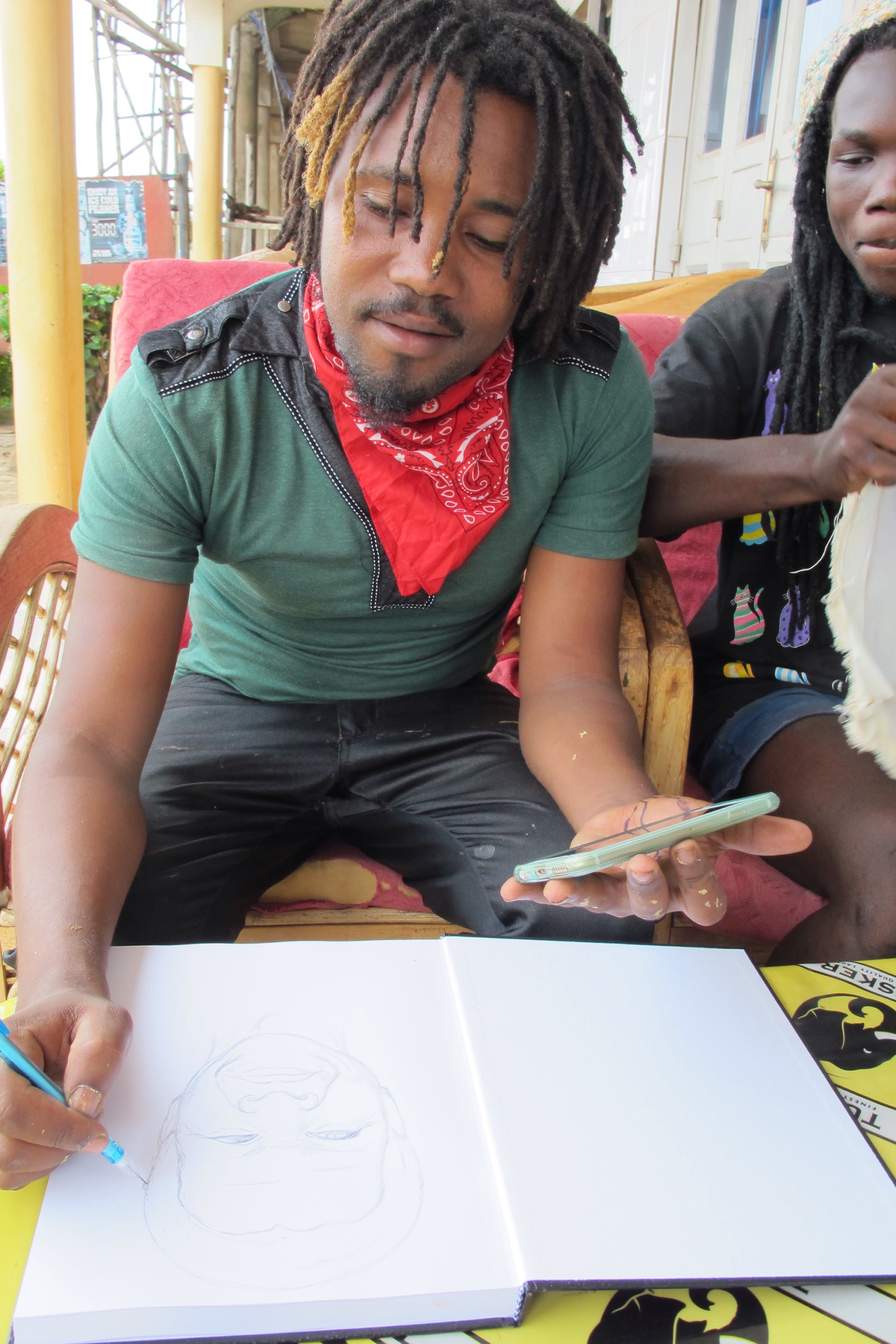
Calvin, the artist, and my kid Opiyo Martin sit across from my mother and I. It’s dinner time, we have chicken, they have pork. As we eat, Calvin unpacks his story for my mom. It’s one I’ve heard before and I am quiet because it pains me anew each time he tells it. Calvin is literally a starving artists and with cheeks stuffed with pork he begins. His dreadlocks hang in his eyes as he tells his story benignly, his is a common story here, nothing remarkable in his mind. 

Calvin’s father passed away when he was very young and at the age of six, his mother sold him to be a child beggar on the streets. He begged for money, or did little jobs like take out the trash for shops. Before taking the trash out, he’d pick through it for scraps of food to eat, anything that would nourish his small frame. Then he’d give the money to his owner and do it all again the next day.

When Calvin was seven his aunt found him and took him off the streets and he got to go to Primary 1 (first grade) for a year until she died. It was the only year he got to go to school. Sometime in his teens, he met John and Cindy, an American couple who took him for a few years until they returned to the U.S.

With a mouthful of pork, Calvin tells about how he calls them his parents and how they still write to him and he wishes that he could write them back, but at the age of 25, he hasn’t yet learned to read or write.

This is a good project for Calvin and my mom, a retired reading teacher. My mom will pick up where I left off with Calvin last year. His goal by the time we leave is to be able to read simple words and to write an email back to his parents.


I believe children are smart in lots of ways and I thank God that when he was a teenager, Calvin taught himself to draw and paint. I watch him when he paints, so serious, so focused on color and form and light. He’s remarkably focused, can see the paintings so clearly before he puts brush to canvas.


It’s not surprising to me that his paintings are rich in themes of family, love for one another and struggling to survive. There’s a popular piece of advice amongst writers to “write what you know”. Calvin paints what he knows; longing for family, a desire to be loved and his struggle to survive.

Calvin’s wife, Faith, is five years his junior. In Uganda getting married is impossibly expensive so it’s common for men and women to become husbands and wives and then have an official ceremony years, or even decades later. This is the waiting place Calvin and Faith are in, settled in their love and devotion to each other, waiting for the money to prove it. Calvin’s face lights up when he talks about Faith, how she loves him even though they have very little money. Calvin says he hopes God will one day bless them with children, but for now he has Faith and has taken Ivan, the other painter, as his brother. I smile when he says this because in the absence of a biological family, Calvin has created one.

Calvin tells me that the reason he paints is to someday become someone. In the time I’m here, I’ll use all my breath to tell him he already is.