

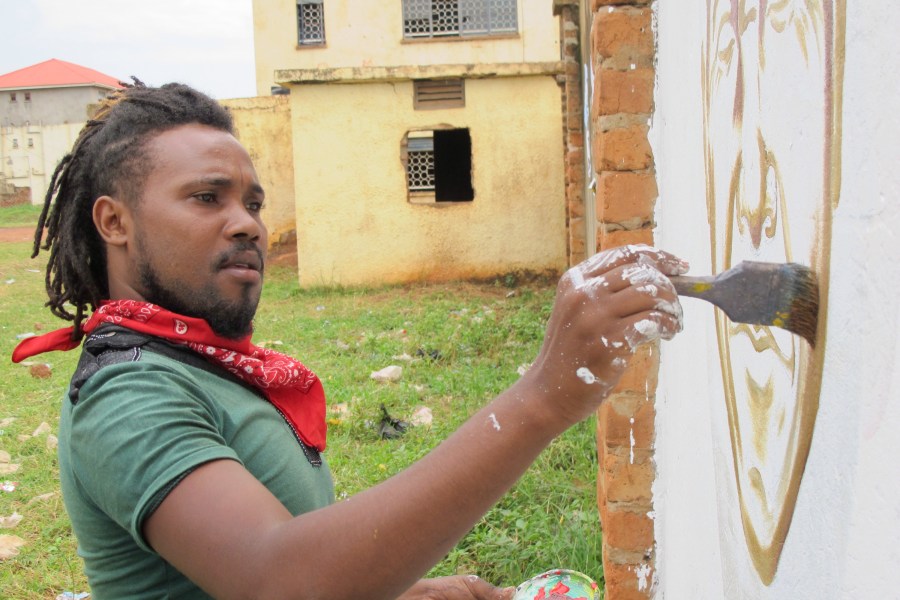
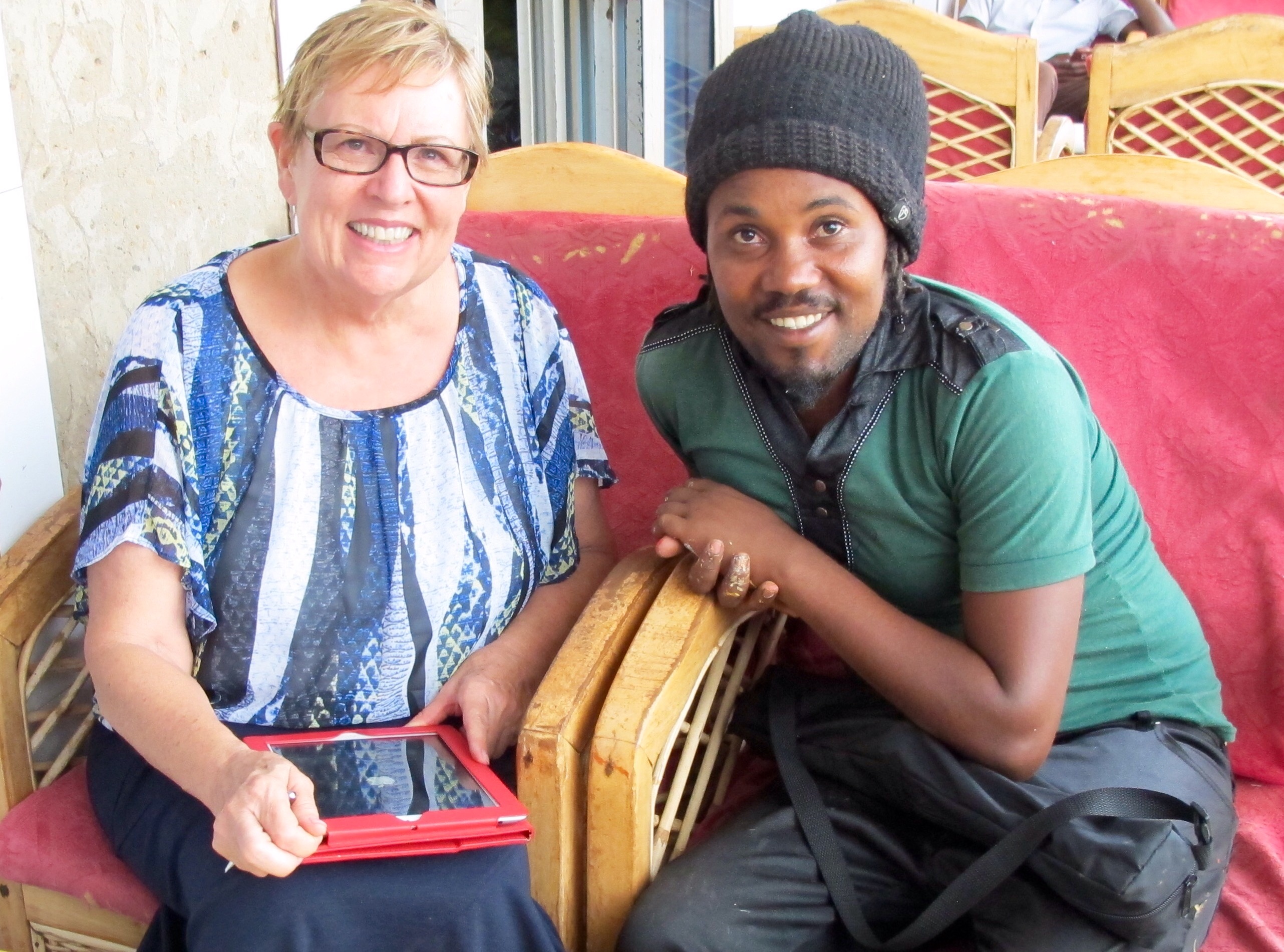
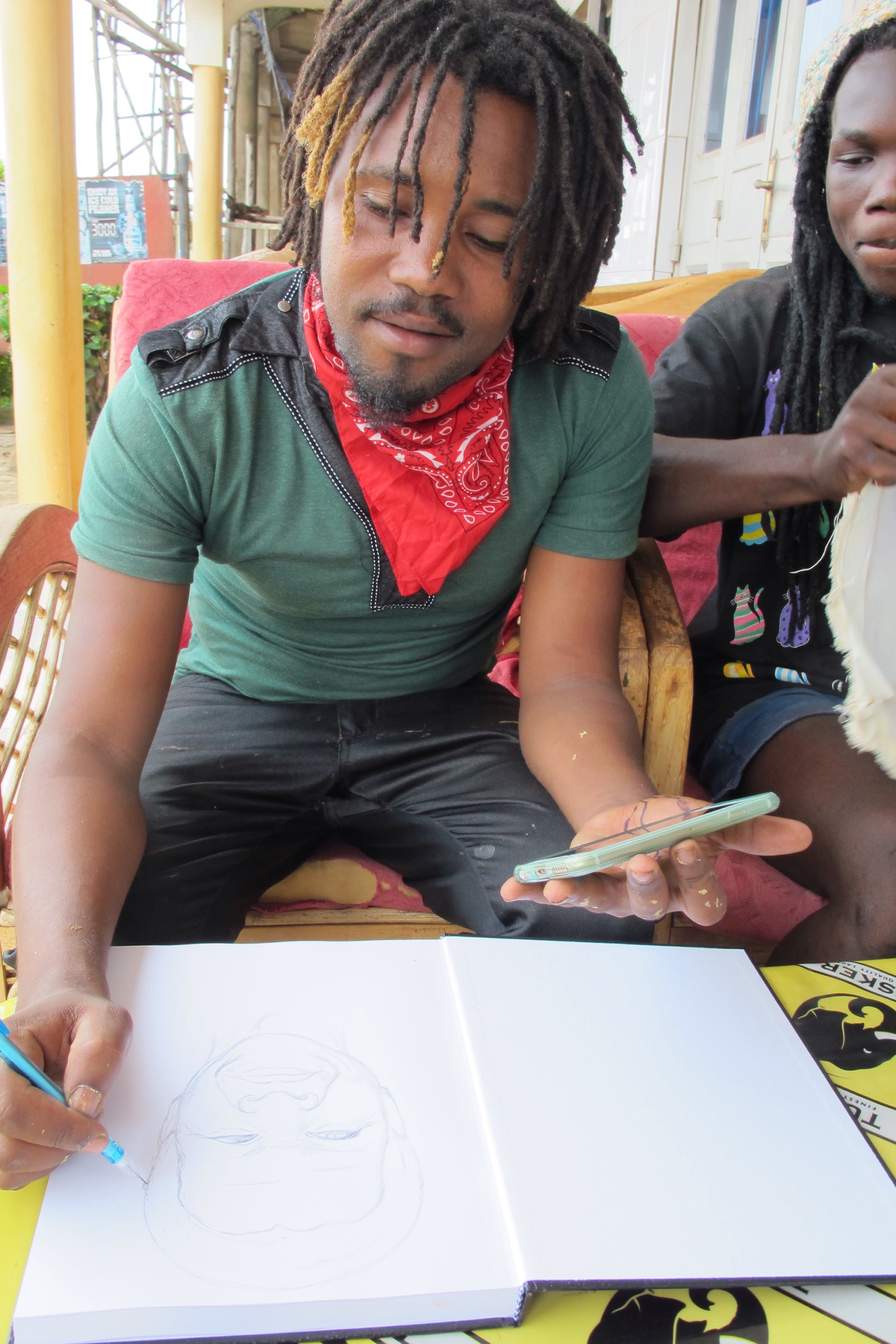
Calvin unpacks his story of being a street kid beggar and I watch as my son, Opiyo Martin, seated next to Calvin, folds into himself, making himself small and aling, quiet. I see his eyes flash back to the time when he, too, was a street kid picking through the garbage to find food to eat, stealing to buy food when the garbage cans availed no sustenance.
I would give anything to take that part of his life away, to erase those years and rewrite his history, to allow him to be born to a mother and father who chose to love him, chose to keep him, chose him.
I’d rewrite those years if I could, even though it would mean he never would’ve become mine. He never would’ve given me my Acholi name. I never would’ve watched joy fill his face as he ate pork, his absolute favorite thing, second only to God. I never would’ve laughed until I cried when he first said to me, “Mum, I love you more than I love pork.”
Even still, I would remove those early pages of his life.
Seeing him fold in on himself as Calvin speaks, is more than I can take. I don’t know how to extricate myself from this conversation, how to take Martin with me. Instead I catch and hold his gaze and move the toe of my shoe until it’s touching the toe of his shoe, the one with the rainbow laces that remind me he’s still a kid. It’s a small gesture and I find myself wishing for the millionth time that I was better at being his mom.

In Uganda, dogs are the lowest of all animals, pesky nuisances, always begging for food, not worth throwing a bone to. The dogs here are all skin and bones, notched rib cages visible through thin layers of matted fur. There’s an Acholi saying, Adoko gwok, meaning “I’ve become a dog.” It’s a term for the destitute, meaning I’ve become less than nothing, a person unable to provide even my own food.
Opiyo Martin always feeds the stray dogs, coos soothing words to them, feeds them the best pieces of pork from his plate. He does this because he remembers feeling like he was adoko gwok, remembers feeling as if he was worth less than nothing.
When Calvin pauses in his story, Martin explains that he’s sorry, but he has to ride his bicycle back to his uncle’s house before it gets too dark. I jump up and walk him to his bike.
“Are you okay? I know it’s hard for you to think about your past,” I put my hand on his back, rub small circles like my mom used to do when I was sick.
“Yeah, Mom, I’m okay. I’m just thinking about how far God has brought me.”
My voice catches in my throat and I nod, blinking back tears. There aren’t words for the vastness of his statement.
Earlier in the evening, we’d been talking to each other about difficult situations we each find ourselves in, seeking advice from each other. It’s one of the many times, I’m grateful to have been his teacher and friend before I became his mother. How lucky am I that my kid is also my friend?
“Mom, I wanted to pray for you and your situation. Can I do that?”
“Yes, and let me pray for you and your situation, too.” I grab his hand and standing by his bicycle we pray. We finish and I hug him tight.
“Amari, latina,” I love you, my child.
“Amari, mamana,” I love you, Mom.
“More than you love pork?” I tease.
“At least as much as I love pork,” he teases back. 
He swings a leg over his bike and I watch his rainbow shoelaces flutter in circles as he pedals away from me.
Later that night I lay under the cover of my mosquito net and hear the street dogs commence their nightly howling serenade. I wonder if they’ve found enough scraps to eat. I think of the children who are huddling in doorways and I hope that their bellies are full. I say a prayer of thanks that Calvin and Martin are no longer among them. My eyelids are heavy and I fall into a dream world where there are no longer hungry children or skin and bones dogs, a world where nobody feels adoko gwok.

 Vigilante Kindness