Kijumi is Coming

I woke this morning to the welcome voice of thunder and the syncopation of rain. I drew back my curtain and breathed in the relief. It hasn’t rained in Gulu in a month and a half, leaving everything and everyone parched and jacketed in ruddy, red dust.
I threw on some clothes-okay, I really just yanked a skirt up under the nightshirt I’d peeled off and thrown on the floor. I didn’t bother with shoes or anything else. I grabbed my camera and iPad. I tiptoed to my mom’s room to see if she was awake to watch the storm with me, but the crack under her door was dark. So with my camera and iPad in hand, I scrambled back down the hall to the balcony outside of my room. The sun wasn’t up yet and I knew I was in for a spectacular lightning show across the dark sky. I sat on the balcony writing and snapping photos.

The storm was behind me, so I didn’t see the fingers of lightning pointing from the sky and touching the ground. Instead the whole of the sky would go from pitch black to electric pinks and yellows all at once, like a camera flash to the face. As my retinas recovered from each flash, I’d count the seconds between the turbulent thunder and the blinding flashes of lightning, counting the miles separating me from the storm, just like I do with my students at home when a thunderstorm rumbles in. To my delight the increments quickly shrunk from five seconds to one second and then the thunder and lightning were stacked on top of each other, a thrilling assault on the senses.

Not to be outdone by the thunder and lightning, the wind rushed in as well, a welcome reprieve from the stifling, still humidity. The wind whipped at my skirt and splashed my bare feet with rain. My balcony overlooks the once grand Pece stadium and I watched the field puddle.

During my first two nights in Gulu, sleeping was a near impossibility. My jetlagged body struggled to adapt to the correct clock and to the humidity that always sucks the life out of me at the beginning of my trip. At night I’d lay naked under my mosquito net, not the sexy kind of naked, the ugly, sweaty “peel everything off to survive” kind of naked. Mosquitoes buzzed around my net and I laid there sweltering.

I can only imagine what the last month and a half in Gulu have been like. I’ve seen the parched, brown crops and can imagine the utterings from cracked lips praying for rain in this unexpected dry season.

The morning of the storm, I watched the sun peek her pink face from behind the clouds as the spaces between the thunder and lightning counted back up to six, then seven, then ten miles away until the storm held its breath altogether. The soccer field drank the puddles and they vanished almost as quickly as they’d formed. Just when I thought the storm was through, a fresh slashing of rain fell, and a second helping of thunder and lightning filled the sky until the ground was sodden and swollen with rain.

Later that morning, I sat downstairs talking with an old musee. He taught me the Luo name for thunderstorm (mwoc pa-kot) and the Luo names for different kinds of rain. There’s ngito, meaning a drizzle. There’s kot paminilemu, an unexpected rain. But my favorite kind of rain is kijumi, a long, hard rain.

The musee talked about the parched crops and how this mwoc pa-kot and kot paminilemu vanquished his worries of famine. 

Famine. 

And here I was complaining about the heat because it made it hard to sleep. Fear of famine had never even crossed my mind. I’ve never known the worry pangs of impending famine. Hang on, I need to add that to the list of things I’m thankful for so I remember it the next time I pray. Be right back.

While I’ve not known physical famine, I have known the feeling of famine in my spirit, the ugly nakedness of feeling bereft. I know about waiting and praying with dry, cracked lips for some relief, any relief to fall from Heaven. I also know the reprieve of rain and the joy of hearing the cool whisperings of God blow into my life.

Vigilantes, it’s a privilege to know so many of you in person, to know your stories well, as if they were my own. Some of you are impossibly parched right now, famished down to brittle bones, praying desperate prayers from cracked, dry lips. I don’t have any pretty, pious words for you, but I prayed for you today, prayed that you’d be absolutely sodden with a first and second helping of rain. I want to encourage you to hold tight, dear ones, in the midst of your dry season keep praying. 

Your kijumi is coming.  

Leng Leng Like a Watermelon

“I see you’ve put on more weight.”

If there are words more hurtful or cutting, I don’t know them. Only my doctor gets to say that to me and even he says them sparingly while beyond the reach of my right hook.

On my first evening back in Uganda, I sat outside my hotel in Gulu when my friend, Chris, who works at the hotel approached. I hugged him tight and greeted him in my best Acholi. He responded, “I see you’ve put on more weight.”

I fought back tears and forced a smile, one that might cover the fact that I have put on weight.

This past year was a tough one. I survived an impossible situation at work and spent the year learning to navigate the unexpected bouts of loneliness that came with my husband’s new work schedule, which has him working out of town more often. I’m not saying either of those are a good excuse for overeating, but that’s the reality of the choices I made this year.

So there I stood, chubbier than I was a year ago, absorbing Chris’ statement about my weight.

Now before you start readying your own right hook for Chris, let me explain a little piece of Acholi culture. The Acholi are a strong, svelte people. They primarily grow and raise their own food. Every home has a well-tended food garden and there is not enough food to eat for any other reason other than hunger.

When they comment on a change in weight, it’s an observation, not a judgment. When you lose weight, it’s not uncommon to hear something like, “You are losing your fat, are you sick?”

In that same vein, if I have a pimple or a mosquito bite or a scrape, my Acholi loved ones will poke it with their finger and ask me about it. It would be rude to notice something like that and not inquire about it. Let me just say that having the pimple that popped up on my nose poked at is not super fun. But again, it’s not done with any malice and I am expected to do the same to them. Just last night at dinner, my boda driver, Denis, wanted me to feel a wound on the back of his head. I explained that I didn’t want to poke something that already hurts and cause him more pain, but he insisted I feel it, feel the place he was hurt.

That’s the thing that had me fighting back tears when Chris remarked on my weight. He was poking a tender place that was already hurt. I know as I see more of my Acholi loved ones for the first time this year, they’re going to remark on my weight, they’re going to unintentionally touch a painful place.

Yesterday on the eight hour bus ride from Kampala into Gulu, our bus stopped alongside the road for one of the many patches of road construction. Food and drink vendors rushed to the stooped bus to sell their items to the people on the bus. I wasn’t hungry or thirsty, but as our bus waited I struck up a conversation with two of the vendors standing underneath my window. I figured it would be a good opportunity to practice my Acholi. They greeted me. I greeted them. They asked where I was going. I told them I was going to Gulu to do some work. It was all very benign.

Then of the vendors said I was beautiful. This is another Acholi cultural thing, they think all white women are beautiful and they feel free to comment on it. Normally I don’t give any attention to such remarks because they’re not real compliments and the color of my skin has nothing to do with beauty, but the vendor outside my bus window had said something a little different.

He said, “Mzungu, you are leng leng like a watermelon.” Translation: White girl, you are beautiful like a watermelon.

Then his friend chimed in, “Your eyes are like beautiful pineapples.”

I laughed and thanked them in Acholi and our bus pulled away a few minutes later.

That evening as I sat talking with Chris, fighting back tears from his remark about my weight, the words of the roadside vendor launched from my lips. “Today someone told me I’m leng leng like a watermelon, Chris.”

It’s true, I may be round like a watermelon, but I’m also delicious and full of life. I’m happy to tell you that I not only survived that impossible work situation, but I came out the victor. I’m glad to tell you that I’m doing a better job navigating bouts of loneliness. I’m riding my bike and doing this revolutionary thing called eating when I’m hungry. If you’ve ever struggled with your weight, then you know how seriously revolutionary that is.

Beautiful like a watermelon? Hell yeah, I am.

Malea’s Good Name

In the darkening Gulu evening, my son, Opiyo Martin, and I stood outside, our bellies full of pork and cassava. I smiled at the laughter coming from my mom and my other sons, Otim Geoffrey and Oryem William, seated only a few feet away, their bellies full of pork and cassava, too.

I kept Martin aside for a few minutes. On our walk back from dinner we’d been talking about the chicken farm project and I told him about the people who had donated to make their chicken farm a reality.

“Opiyo, I have to tell you the story of Malea, a darling, blond-haired, six-year-old girl from my city. She loves swimming, she collects rocks and shells, and she’s one of your chicken farm donors.”

I began to tell Martin Malea’s story and his singular response was, “Oh my God, Mum, oh my God, oh my God.” His words weren’t the bubblegum OMG, used so often today. They were reverent, a sacred recognition of the providence of God.

Before I tell you the story, grab a mug of your favorite something, put your phone on silent, and sit down for five minutes to read Malea’s story. You’ll be glad you did.

A few weeks ago Malea’s mom, Anna, Facebooked this photo of Malea, who had emptied out her piggy bank with the express purpose of using her money to help someone in need. Anna was searching for an avenue for Malea to do just that. I told her about Vigilante Kindness, specifically about our chicken farm project because Malea’s savings would be nearly enough to purchase two chickens. Anna talked it over with Malea and Malea agreed that buying a pair of chickens was a worthy use of her eight dollars and change.

Can’t you just picture her sorting precious dimes and pennies, smoothing out her dollar bills and counting it all up? See that envelope Malea is holding in the photo? She made it and tucked her money carefully inside. It gets me every darn time.

image

As if that wasn’t enough, a couple of days before I left for Uganda, Anna texted me and asked if there was still time for Malea to donate. I told her yes, that I was making a final deposit of a few last local donations that same day.

Malea had sold rocks and shells from her collection. She’d sold enough of her collection to buy herself a new toy and to buy a third chicken. A third chicken. I can’t even.

Sometimes I can’t believe I get to be part of this work, this work where piggy bank dimes and a little girl’s rocks and shell collection become chickens for a chicken farm in Uganda, a farm that will allow my sons and other students to earn their own school fees and to tithe chickens to take care of widows and orphans.

Never in my life could I have dreamed up such a thing.

I understand Martin’s response to Malea’s story because it’s been the entirety of my prayer life this past week. I’m overwhelmed both by your generosity, sweet Vigilantes, and the providence of God working through you. In the face of such sacrifice and such kindness, I, too am lost for words save for, “Oh my God, oh my God, oh my God.”

Malea picked out names for her chickens. Her third chicken will be named Jasmine. Her second chicken will be named, Chickaketta, which is quite possibly the most perfect chicken name ever. Her first chicken will be named, Malea, because, in the words of a blond six-year-old who loves swimming and now has a much smaller rock and shell collection, “Malea is a good name.”

I couldn’t agree more.

Let’s be Facebook Friends

Well, Vigilantes, my bags are packed, I’m remembering to throw anti-malarial pills down the hatch and I’m all kinds of excited to return to my Ugandan home.

I’ll be posting longer stories of Vigilante Kindness here as usual, but if you want to follow along and see all the small moments, too, you’ll want to follow Vigilante Kindness on Facebook.  When there’s power, I post a ton of photos there as well as funny little stories that aren’t quite grown up enough to be blog posts. So let’s be Facebook friends.

Also, some of you have been asking how you can pray for us during our trip, so I made this flyer for you.  You can print it out, pop it on your refrigerator and each time you open your fridge door and feel that blast of cool air, think of me in humid Uganda and say a quick prayer.

Pray for VK

Thank you,

Alicia

Humps in the Road

Hey, Vigilantes, have I told you lately how much I adore you? I have? Well, let me tell you again.  I love you to smithereens.

Not a single day goes by that I don’t hear things like, “Hey, Alicia, what can I do to help you?” or “Is there something specific you need donations for?” or “How can I specifically pray for you?”

And I can barely even talk about the donations that just show up without fanfare.  Little PayPal notices in my inbox, crumpled bills shoved in my hand when we bump into each other at the grocery store, and white envelopes in my mailbox with notes like, “Use this to do something good.”

I’m beyond grateful to get to do this work with you.

I feel like when I go to Uganda, you all go with me.  And I love that.  This isn’t my story or my adventure, it’s ours and I don’t want you to miss a second of it.  You don’t either?  Good.

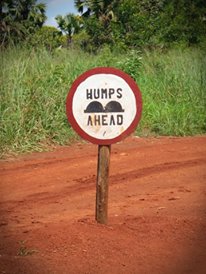
Many of you follow our blog and I’m glad because it’s the place I get to write all the long, beautiful stories Vigilante Kindness is part of, but I want you to see the smaller moments, too, like this one of my favorite street sign in Uganda.  I can’t help it, it makes me giggle every time.

Humps ahead...
Humps ahead…

I’ll be posting all of the little moments and photos to go along with them on the Vigilante Kindness Facebook page.  I hope you’ll take a moment to pop over there and like our page so you can see every sweet, hilarious, lovely morsel of our story unfold.

The other reason I’m posting today is because the weeks leading up to returning to my Ugandan home are always trying-so many humps, er, bumps pop up unexpectedly in an effort to derail the trip.  It happens every year at the same time, always strange, strange things and the timing is too coincidental to be ignored.  So would you say a quick prayer or a long prayer or whatever kind of prayer suits your fancy that God would continue to guide and protect me these next couple of weeks?  I’d appreciate it so very much.

Lots of love to you, sweet Vigilantes,

Alicia