
If you’re just joining the story of Te Okot you can read Part 1 here.
The people of Te Okot waited to hear my plan. I didn’t really have one, except to write about the need for clean and consumable water and then wait. Oh, and pray. A lot.
Can that even be called a plan? Surely not, but maybe a thin thread of faith would be enough to string something together. It would have to be enough because I was still tamping down doubt, still reeling from the sting of Bungatira.
I was once slapped by a classmate in junior high school. I deserved it. Frankly, I deserved more than one slap, but that’s a story for another time. What I recall so vividly is the sting left on my cheek, the red shame fingerprinted across my face.
I felt the same way about Bungatira, like the forced relocation of Denis’ clan had delivered a full body slap and my skin still radiated with the sting of it.
Doubt bubbled up. What if the same thing happened in Te Okot? What if injustice opened its wide mouth and swallowed everything up again?
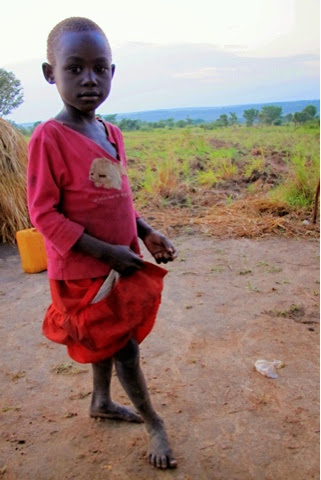
It was the thought of innocent Aber, daughter of Agnes who compelled me to continue. Even if the hearts of the people in Te Okot eventually did turn, could I really walk away from children in need of safe water?
No. Absolutely no.
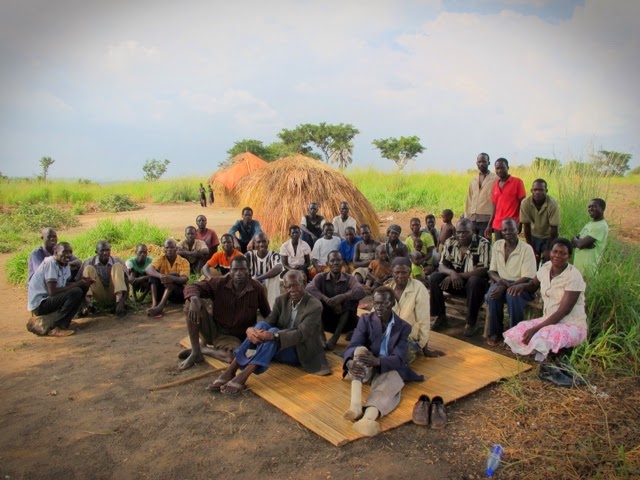
“Ok, here’s what I can do,” I took a breath. “I’ll write about your need for water, but I’ll need to take your pictures and pictures of your water source to help tell the story. So if there’s anyone who disagrees, speak now, please.”
Nobody disagreed. In fact they arranged themselves for a photo. I snapped a few shots, my finger shaking on the button.
Lately, I’ve been reading a lot of Anne LaMott and what she calls two of the most holy prayers skittered into my thoughts. “Help!” and “Thanks.” I’ve talked about the lack of polish of my prayer life before and I’m okay with it, okay with knowing that my feeble pleas and pittances of thanks are enough. At that moment I prayed and felt the “Help!” prayer down through every part of me. The “Thanks” prayer was insincere at that point, but I said it anyway hoping the uttering of the prayer would bring about the thanks. Because sometimes it’s that way for me, the action begets the feeling and there in the severe bush I clung ferociously to that notion.
Denis told the community group about the solar lights I’d brought on behalf of my fellow Vigilantes of Kindness. Each family in attendance at the meeting received a light. (I was nineteen lights short, so the following day I stuffed nineteen more lights in Denis’ messenger bag. The eight charging lights I carried in my backpack will now be used as a charging station, free to all members of the clan to come and charge their phones.)
Then the Musee and many others in the group led me down the path to see their water. I was wet with humidity before even a minute passed. The walk to the water was about a mile through grasses as tall as I am.
I whispered to Agnes, “I fear snakes.”
“It’s the elephants who do the most damage.” She pointed to a place where the grass had been trampled by elephants.
Ah, yes, wild elephants, how silly of me to have been afraid of the snakes.
To say that the water source was abhorrent is an understatement. I’ve seen quite a few different kinds of water sources in my time here and this, this one is the worst. See for yourself.
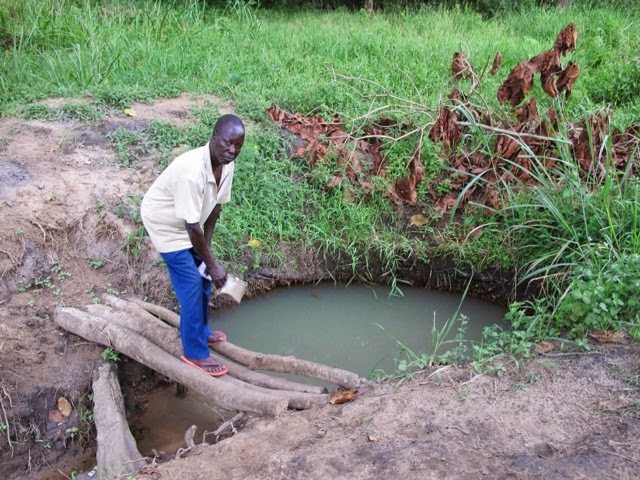 Thirsty? Me either. Want to wash dishes in that? Want to wash yourself in that? Want to cook for your family with that? No, no and no.Plus again, there are the elephants. This is where the elephants get their water. If you and an elephant reach the water at the same time, guess who’s getting the water?Not you.
So not you.
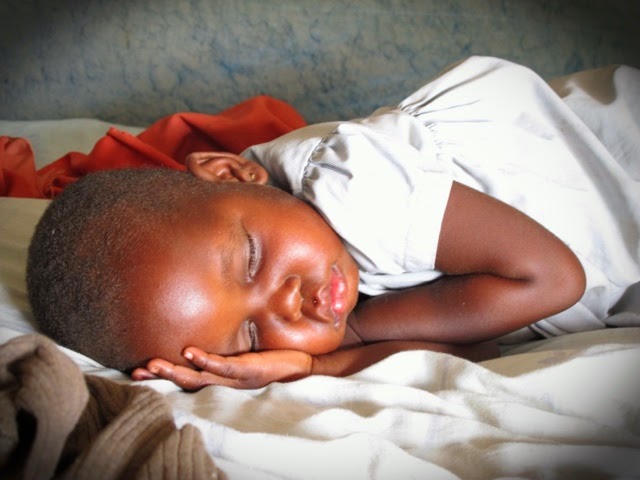
The rain began just as we started back toward the village and even though we ran, we were soaked through and took refuge in Agnes’ hut. Aber, the warm baby in my lap, was all coos and giggles and wags of her tongue.
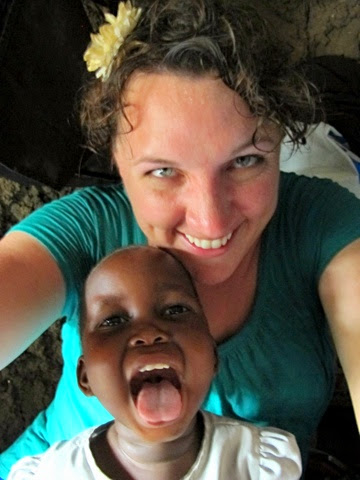 How could I get her clean water? It played over and over in my mind.God, help and thanks, help and thanks, help and thanks. That was all I could pray under the pelting rain.When the rain let up, I gave sweet Aber back to her mom and Denis and I continued via boda to Pakwach, the town nearest to Te Okot. Here I forked out Vigilante Kindness shillings for food starts like beans and dried cassava root for Denis’ family.
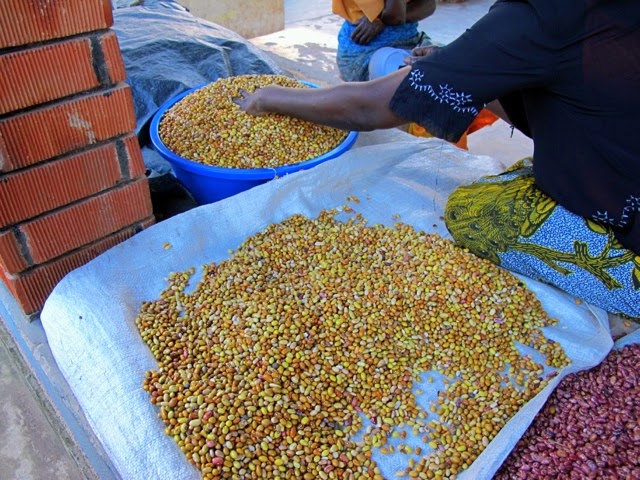 He’d spent the past few weeks chopping down trees, burning the logs into charcoal and selling the five feet tall sacks of charcoal for $8 a bag. He did this because it was the only resource he had to buy food for his family.Imagine that kind of hard labor, that kind of hungry desperation to try to provide food for your family. I thank God that I’ve never had to know that hunger. I’ve never had to wonder if and when I’d get to eat again.It crushed me to think of Denis the eager student, Denis the pig farmer, Denis the leader of his community group sitting by the roadside peddling charcoal.
We dropped the beans and dried cassava off at Te Okot and stopped to eat a meal they’d prepared for us, beans and millet bread. I bit my lip to keep the tears from coming. This simple meal was perhaps the most generous gift I’ve ever received and as I ate, I savored every spoonful.
This is what sacrifice tastes like. This is the flavor of generosity. Beans and gritty millet bread prepared for me by my loved ones in the bush who have little more than nothing and give to me with abandon. Anything I give in return to my loved ones in Te Okot will pale in comparison to this meal. I give from abundance. They fed me out of their need and just like that the order of my prayer changed. Thanks and help. Thanks and help. Thanks and help.
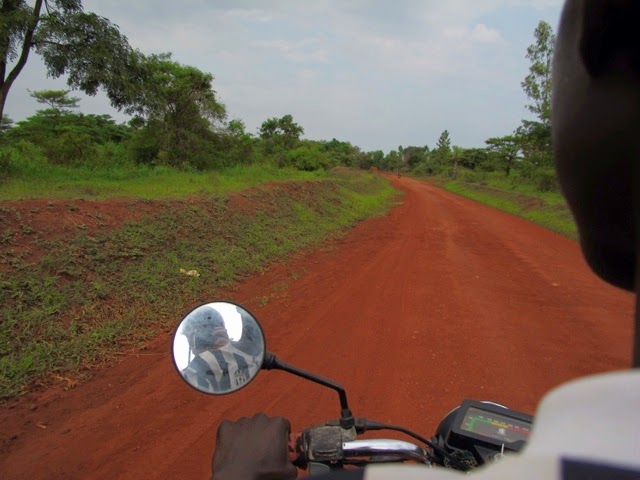
Denis and I finished our meal and as the sun set over the River Nile, we began our long journey home. We rode in darkness and said very few words. We’d spent them all today and my mouth felt bankrupt of words that would suffice anyway. Our bodies were heavy with fatigue and the full face of the moon watched over us as we rode through the scarred, dark land two and a half hours back to Gulu.
The next morning everything still ached, like down in my bones ached, from the long trip the day before. I say a prayer of thanks that I didn’t do it on foot or on a bicycle. Denis runs me around town on errands and after a few errands, he bounced up and down to tell me that he’d found a second-hand boda boda for sale and it’s in our price range. After a quick test drive, I couldn’t pay for it fast enough with the Vigilante Kindness shillings.
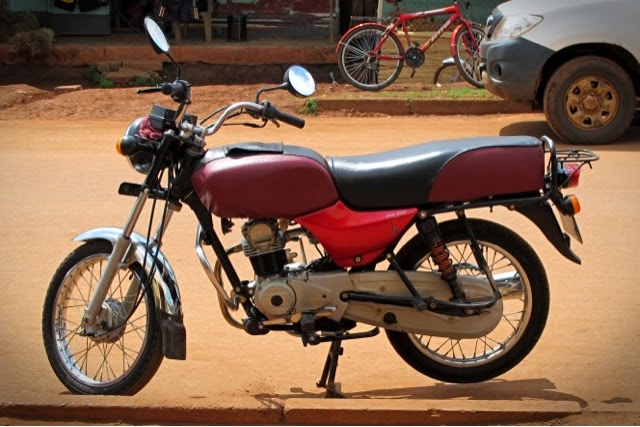 A boda means Denis can go to school.A boda means Te Okot can pile their jerricans high on boda and fetch clean water from another town until we figure out how to get a sustainable clean water source.A boda means they can ride to the nearest medical center when needed.
A boda means Denis can transport his elderly parents safely to Te Okot.
It’s not clean water.
Not yet.
But for the day it was enough and as I put my head on my pillow, I got a call from Denis telling me that the people of Te Okot put their solar lights outside that night to keep the elephants, who fear light, from trampling into their village. It’s the first time they haven’t had to sit up all night stoking a fire to keep safe.
Ah, yes, those wild elephants, how silly of me to have only thought of the lights lighting up the inside of the huts.
I closed my eyes and before I fell to sleep I prayed again. Thanks and help, but mostly thanks.
P.S-I’m meeting with my well guy tomorrow morning. I know some of you are chomping at the bit to help me get a well to Te Okot and I love your urgent Vigilante hearts. You’ll be the first to know as soon as I know more about exactly how to make it happen.
 Vigilante Kindness